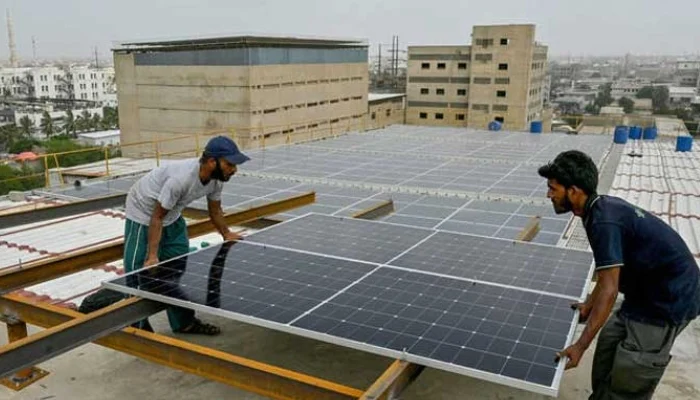





Punjab has launched 38 Annual Development Programme (ADP) schemes under its Climate Resilient Punjab Vision 2024, officials said, marking a rare instance where environmental and climate projects were finalised ahead of schedule ahead of implementation. Senior Provincial Minister Marriyum Aurangzeb stated the initiatives are now underway across multiple sectors in the province.
The vision reflects a broader strategy to strengthen climate adaptation and mitigation, a framework that aims to protect natural resources, build resilience, and integrate climate priorities into provincial planning. These schemes align with recommendations found in Punjab’s official climate action plans, focusing on sustainable development, disaster risk reduction, and green economy pathways.
Focus on air quality and smog control
A key part of the programme is tackling smog and air pollution, long-standing challenges in Punjab. The government has distributed 20,000 agricultural super seeders, balers, and harvesters this season to curb crop residue burning, a major contributor to winter smog. Earlier steps provided 5,000 super seeders at subsidised rates; this year, an additional 15,000 were added.
The province is also deploying anti-smog guns and modern fog cannons, equipment designed to reduce particulate matter in urban and industrial centres, and has already recorded measurable reductions in PM10 levels where the guns are operational. Plans are underway to install 30 fog cannons on electric trucks at a cost of approximately Rs3 billion to further suppress dust and air pollution.
Environmental monitoring and governance upgrades
Punjab is expanding its environmental monitoring infrastructure as part of the rollout. Over 50 modern air quality monitors have been installed across the province, together with automated quality assurance systems. Water quality monitoring stations have also been activated on major rivers to track 15 key parameters via telemetry.
The government plans to establish the Punjab Climate Observatory and expects climate and observatory legislation to be presented to the provincial cabinet within six months. The Environmental Protection Agency (EPA) has been fully digitised to improve transparency and enforcement through online case and fine management systems.
Broader resilience measures and public engagement
Other components of the climate vision include relocating industrial units from Lahore to reduce pollution before the next smog season, instituting plastic-free zones in commercial areas, and expanding climate education and school programmes. Waste management improvements, the installation of incinerators in public and private hospitals, and digital dashboards to monitor project performance have also been highlighted as priorities.
To complement on-ground action, authorities are developing policy frameworks for emissions trading, green finance, and climate-smart entrepreneurship, building blocks for longer-term resilience and sustainable economic growth.
Outcomes and expectations
Officials say the early rollout of these schemes under the Climate Resilient Punjab Vision 2024 reflects a proactive shift in how environmental and climate priorities are integrated into everyday governance. By combining pollution control, monitoring systems, legislative frameworks, and public participation, Punjab aims to not only curb immediate environmental hazards but also strengthen its capacity to manage future climate impacts.