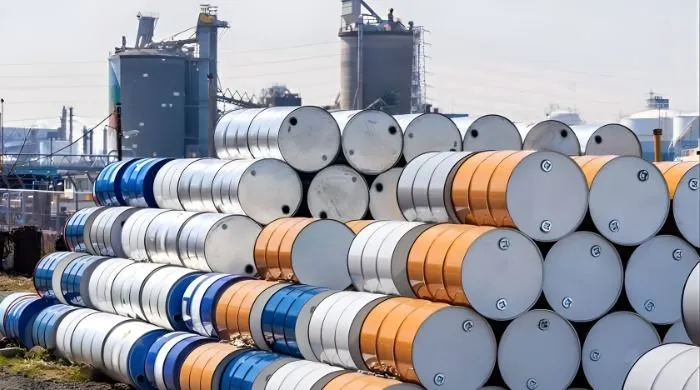
The government has imposed stricter controls on the export of furnace oil, requiring oil refineries to obtain prior approval from the Prime Minister’s Committee on the Monitoring of Petroleum Prices before any shipment can be exported. The directive was issued by the Ministry of Energy’s Petroleum Division and communicated to the Oil and Gas Regulatory Authority (OGRA).
Officials said the decision was taken in light of the volatile global oil market and supply risks linked to the ongoing US-Israel-Iran conflict, which has raised concerns about the stability of international energy shipments.
Regional conflict driving energy supply concerns
Authorities warned that geopolitical tensions in the Middle East have made global oil supply chains increasingly uncertain. Shipping routes through the Strait of Hormuz, one of the world’s most critical energy corridors, have been disrupted, creating delays and higher transportation costs for oil cargoes.
Roughly 20% of global oil supplies pass through the Strait of Hormuz, making it a strategic chokepoint for the international energy market. Even temporary disruptions can trigger supply delays, freight price increases, and significant volatility in fuel prices worldwide.
Pakistan’s heavy reliance on imported fuel
Pakistan remains highly dependent on imported petroleum products, particularly from Gulf countries. Data from the petroleum sector shows that during the first eight months of the current fiscal year, the country imported around 3.6 million metric tonnes of petrol and about one million metric tonnes of high-speed diesel to meet domestic demand.
This heavy reliance on imported fuel means any disruption in Middle Eastern supply routes can quickly affect Pakistan’s energy availability and pricing structure.
Rising oil prices and freight costs
The conflict has already pushed up international petroleum prices. Recent market data shows high-speed diesel prices rising by around 34% to $118.51 per barrel, while motor spirit (petrol) prices climbed about 27% to $90.02 per barrel.
Freight charges for transporting refined petroleum products have also increased significantly as tanker operators exercise greater caution while navigating the Gulf region.
Government aims to safeguard domestic supply
Officials say the new export approval requirement is intended to protect domestic fuel availability and allow the government to closely monitor petroleum flows during a period of heightened global uncertainty.
By controlling furnace oil exports, authorities aim to ensure that Pakistan maintains adequate reserves and avoids sudden shortages in the local market while international energy markets remain volatile